What Happens During a Soft Wash, Step by Step
You've booked a soft wash for your roof, or you're thinking about it, and you want to know what actually happens when the day comes. It's a fair question, because "soft wash" gets used a lot without anyone explaining what it involves. If your picture of roof cleaning is someone hammering the slate with a pressure hose, the reality is calmer and a good deal gentler than that.
Knowing the steps also helps you spot whether a job is being done properly. A rushed clean that skips the treatment or blasts the tiles will look fine for a few weeks and then let you down. This walkthrough runs through a soft wash from start to finish, so whether it's a slate tenement roof in the west end or a tiled semi out in the suburbs, you'll know what good looks like on the day.
The quick answer: A soft wash surveys the roof, clears loose moss and debris, applies low-pressure water, and finishes with a biocide treatment that kills the growth at the root so it stays cleaner for longer.
1. The survey and setting up safely
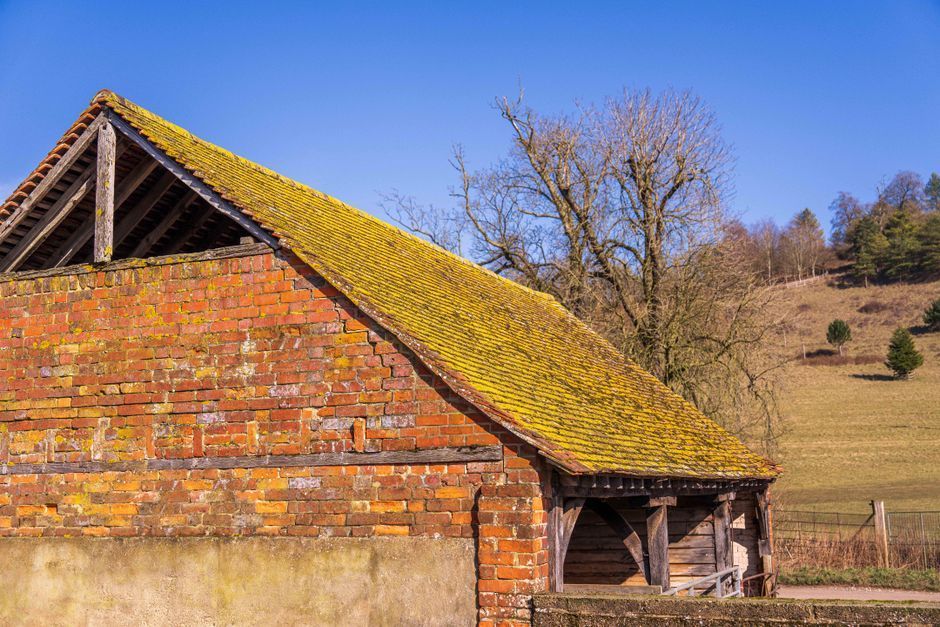
Every proper job starts with a look, not a hose. Before anything is touched, the roof gets checked over for loose or cracked slates, the state of the moss, and how bad the gutters are. It also matters where the water and runoff will go, which on a dense Govanhill or Dennistoun street with a shared back court needs a bit of thought so a neighbour's washing line or bins don't cop the drift.
Then comes access. On a steep slate tenement that means the right ladders or a platform set on firm ground, and often a reach-and-wash pole system that lets the work happen from a safer position rather than clambering across the slope. Getting this right is half the job. It's also the part a cowboy skips, and it shows.
2. Clearing the loose moss and debris first
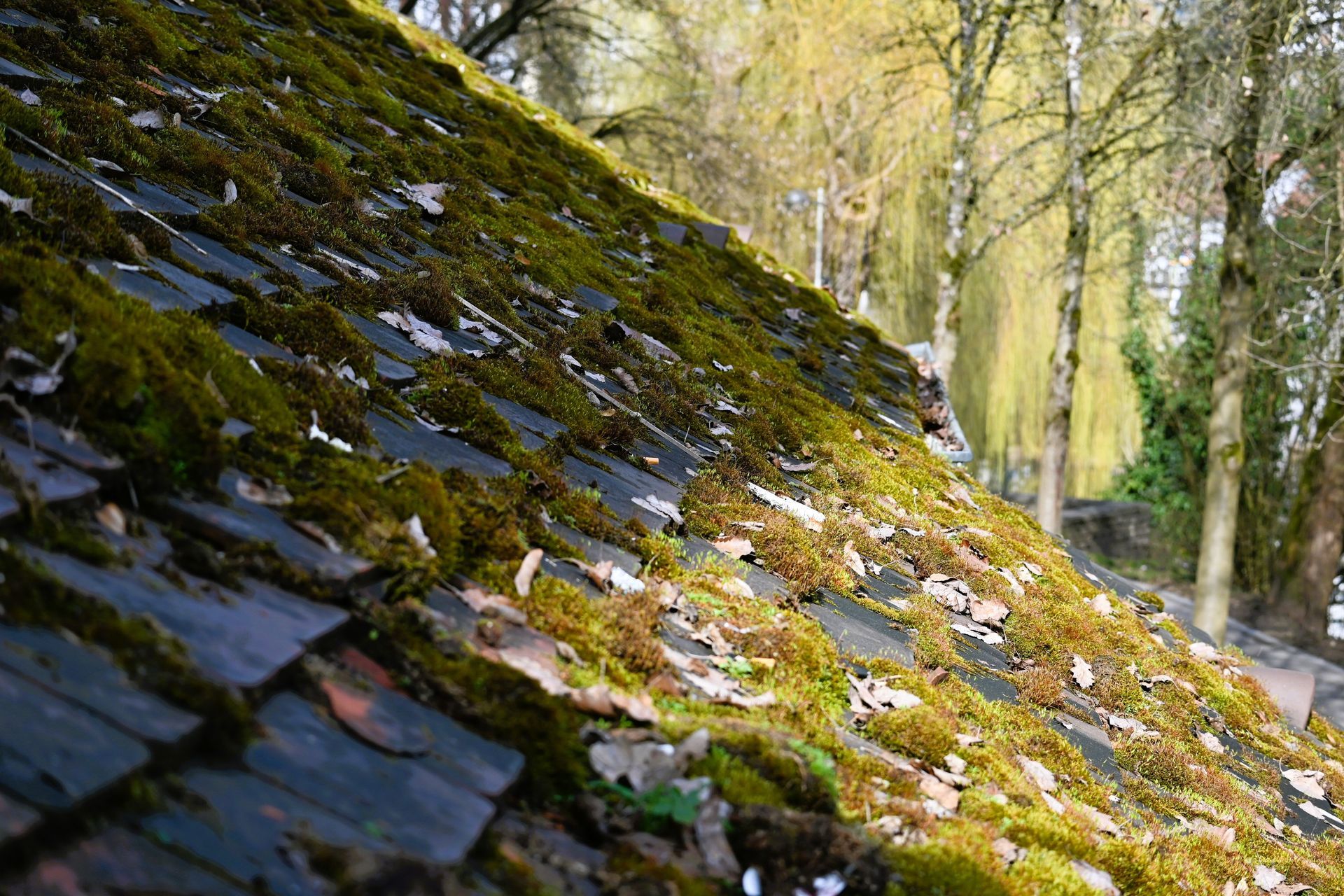
With everything set up, the first hands-on step is shifting the bulk of the loose growth. A thick carpet of moss on a Glasgow roof holds a surprising amount of water and grit, and there's no sense drenching all that in treatment while it's still sitting there. So the heavy, loose material gets brushed or scraped off gently, working with the lie of the tiles rather than against them.
This is done by hand or with soft tools, never by gouging at the slate. Scottish slate is brittle and the point is to clean the roof, not chip it. On an older roof, some moss will be gripping hard and that's left for the treatment to loosen rather than forced off, which protects the surface underneath.
3. The low-pressure wash itself
Here's where the "soft" in soft wash earns its name. Instead of a high-pressure jet, the roof is rinsed with low-pressure water, closer to a firm garden hose than a power washer. That's enough to carry away the loosened moss, dirt, and algae without stripping the slate or driving water up under the tiles, which is exactly what high pressure does wrong.
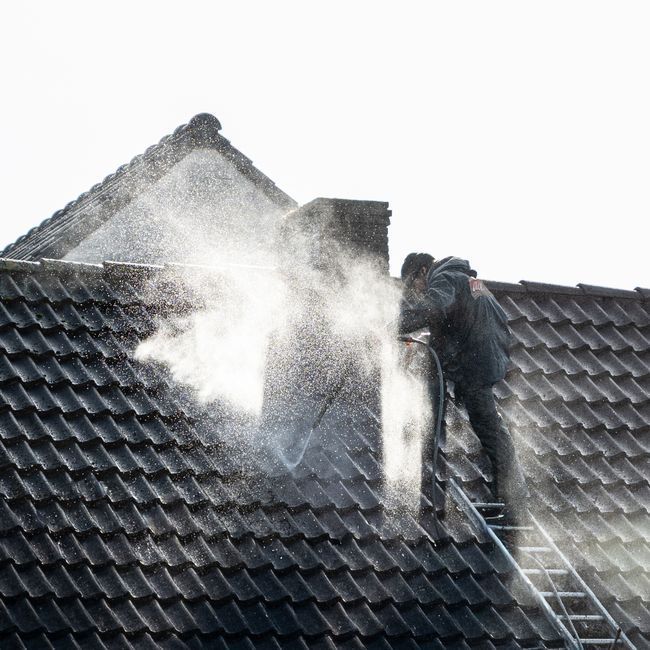
The gentle approach matters even more given our weather. Glasgow roofs already take a battering from Atlantic rain year-round, and the last thing an ageing slate roof needs is someone forcing more water into its joints. Low pressure cleans the surface while leaving the roof's weatherproofing intact, which is the whole reason the method exists.
4. Applying the biocide treatment
Once the roof is clean, the treatment goes on, and this is the step that makes the difference between a clean that lasts and one that doesn't. A biocide is applied across the slates, and it works by killing the moss, algae, and lichen spores at the root, including the ones you can't see. Rinsing alone just removes what's on top and leaves the rest ready to grow back.
The treatment isn't rinsed off. It's left on the roof to keep working over the following weeks and months, which is why a treated roof stays clear far longer than one that's simply been washed. In a damp, mild climate like Glasgow's, where regrowth is quick, that lingering protection is what buys you years rather than months before you need it done again.
5. Clearing the gutters and checking the details
A roof clean that ignores the gutters isn't finished. All the moss and grit that comes off the roof has to go somewhere, and a good bit ends up in the gutters, so they get cleared as part of the job. On tenement and terraced homes across the south side, where gutters take runoff from steep roofs and long runs, a blocked one undoes a lot of the good work.
The details get a look too, things like the ridge, the flashing around chimneys, and any spots where moss was gripping hardest. These are the bits that quietly cause trouble later, so noticing them now, even if they only need watching, is part of a thorough visit rather than an upsell.
6. What you see afterwards, and over time
Straight after a soft wash the roof looks cleaner, but here's the thing people aren't always told: it keeps improving for weeks. Because the biocide carries on killing the moss after the visit, any stubborn patches that were left to die off gradually fade and wash away with the next few rains. So the roof you see on the day isn't the finished result, it's the start of it.
Over the longer run, a treated roof in a Glasgow street stays noticeably clearer than an untreated one, even in the shaded, north-facing spots where moss usually races back. You'll still want a look every so often, but you're maintaining a clean roof rather than rescuing a green one, and that's a much easier place to be.
- Survey first: The roof is checked for damage, moss levels, and safe access before any cleaning starts.
- Gentle clearing: Loose moss is brushed off by hand or soft tools, never gouged, to protect brittle slate.
- Low pressure: Water is applied gently so it cleans without stripping slate or getting under tiles.
- Biocide treatment: A treatment kills growth at the root and is left on to keep working for months.
- Gutters included: Debris that comes off the roof is cleared from the gutters to finish the job.
Frequently Asked Questions
How long does a soft wash take?
Most domestic roofs are done in a few hours, depending on size, pitch, and how much moss there is. A large or heavily overgrown roof on a tenement can take longer, and access is often the biggest factor in the time.
Why does the roof keep changing after the visit?
Because the biocide carries on working. Moss that was left to die off rather than forced away gradually browns, dries, and washes off with the rain over the following weeks, so the roof keeps looking better after the day itself.
Will soft washing damage my slate?
No, that's the point of it. Low pressure and careful clearing are used precisely because Scottish slate is brittle and high pressure damages it. Done properly, a soft wash cleans the roof while leaving the surface and weatherproofing intact.
Do I need to be home during the clean?
Not usually, as long as access to the roof and an outside water source is sorted beforehand. It's worth being reachable in case anything about access needs checking, but the work itself doesn't need you standing over it.
Does soft washing work on tiles as well as slate?
Yes. The same gentle method suits concrete and clay tiles just as well as slate, and the biocide treatment works across all of them. It's the standard approach for most pitched roofs in and around Glasgow.
Want your roof soft washed the right way?
Ben's Roof Cleaning handles soft wash roof cleaning, moss removal, and gutter cleaning across Glasgow and Scotland, with over 15 years of experience. Get in touch or call 0141 483 7632
for a free, no-obligation quote.
Gentle work that actually lasts
A soft wash isn't complicated once you see the steps laid out, but each one matters. The survey keeps it safe, the gentle clearing protects the slate, the low-pressure rinse cleans without harm, and the biocide is what makes the result stick. Skip any of those and you get a roof that looks good briefly and greens over again fast. Done properly, in a city as wet as Glasgow, a soft wash gives you a roof that stays clean and a job you don't have to think about again for a good while.