How Often Should You Really Clean Your Roof?
You've probably wondered whether your roof actually needs cleaning on any sort of schedule, or whether you just deal with it when it looks bad. It's a fair question, and the honest answer isn't a single number. How often your roof needs a clean depends on where you live, what's around it, and the kind of weather it puts up with, and in Glasgow that last part matters a lot.
There's no point cleaning a roof that doesn't need it, and there's a real cost to ignoring one that does. Get the timing right and you keep the roof in good shape without wasting money. This post lays out what actually drives how often a roof needs doing, gives you a realistic guide for Glasgow homes, and shows you the signs that tell you it's time regardless of what the calendar says.
The quick answer: Most Glasgow roofs benefit from a proper clean and biocide treatment every few years, with the gutters cleared once or twice a year, though shaded and tree-covered roofs need it more often.
1. Why there's no single answer
Two houses on the same street can need cleaning at very different intervals, and it comes down to their conditions. A south-facing roof that gets sun and wind dries quickly and grows moss slowly. A north-facing one in shade, or one under a big tree, stays damp and greens over far faster. The roof itself is identical, but what it faces isn't.
Glasgow adds its own weight to this. Our mild, wet climate, with rain most weeks and well over a metre a year, is close to ideal for moss and algae. That means roofs here generally need attention more often than in drier parts of the country. So any rule of thumb has to start from the fact that we're a mossy city to begin with.
2. The things that speed it up
Shade is the biggest factor. A roof that sits in the shadow of a taller tenement, or faces north and never really dries, holds the damp that moss needs. Streets of tall buildings, like much of Dennistoun or the denser parts of the south side, have plenty of roofs that stay green because the sun barely reaches them.
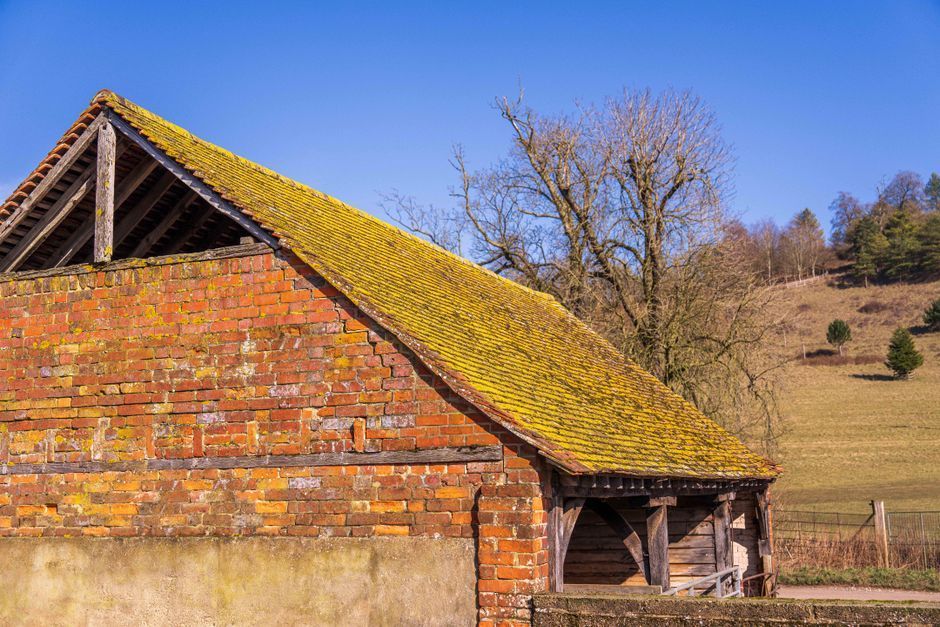
Trees are the next big one. Overhanging branches drop leaves and keep a roof shaded and damp, and they shed debris that feeds moss and clogs gutters. The leafy suburbs and the tree-filled back courts across Glasgow mean a lot of roofs are dealing with constant organic litter. Add older, rougher slate that gives moss more to grip, and you've got a roof that needs doing more often than a smooth, sunny, tree-free one.
3. The things that slow it down
On the other side, some roofs stay cleaner for longer. A roof in full sun and open wind dries fast after rain, and dry slate is far less welcoming to moss. Homes on more open ground, away from tall neighbours and heavy tree cover, tend to green over more slowly even in Glasgow's damp.
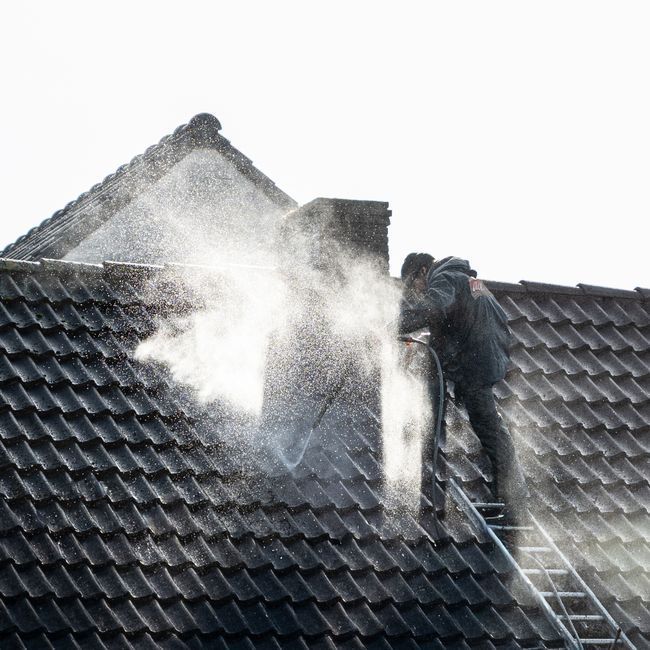
The biggest slow-down, though, is a proper biocide treatment. A roof that's been cleaned and treated stays clear far longer than one that's just been washed, because the treatment kills the spores and keeps working for months. That's why a good clean isn't just about now, it's about stretching the gap before the next one. Treated roofs in the same Glasgow street as untreated ones stay noticeably cleaner for years.
4. A realistic guide for Glasgow homes
Putting it together, a sensible starting point for most homes here is a full roof clean with a biocide treatment every few years, rather than every year. A well-treated roof in an average spot will often go a good while before it needs doing again, and chasing it more often than that is usually money you don't need to spend.
Gutters are the exception. Because they fill with leaves and washed-down moss much faster, they want clearing once or twice a year whatever your roof is doing, typically after autumn and again in spring. So the honest pattern for a Glasgow home is regular gutter clears and a less frequent but proper roof clean, adjusted up if you're in a shaded or leafy spot.
5. Letting the roof tell you
The calendar is only a guide. The roof itself is the better indicator, and it's not hard to read once you know what to look for. Green or black patches spreading across the slates, clumps of moss sitting proud of the surface, or bits of moss dropping into the gutters and onto the path all say the growth has taken hold and a clean is due.
You can check this from the ground or an upstairs window a couple of times a year. If the roof looks much as it did last time, leave it. If the green is clearly spreading or the gutters are collecting moss, that's your cue, regardless of how long it's been. Reading the roof beats sticking rigidly to a number that can't account for your particular conditions.
6. Why regular beats leaving it too long
There's a temptation to squeeze every last year out of it and only clean when the roof looks truly awful. The trouble is that heavy, established moss does more than look bad. It holds water against the slate, works into gaps, blocks gutters, and on a Glasgow roof taking constant rain, that trapped moisture is what leads to damage over time.
Keeping to a sensible rhythm means each clean is a maintenance job rather than a rescue. A roof that's cleaned before the moss gets thick is quicker and gentler to treat, and it never gets to the stage where the growth is causing harm. Staying ahead of it is easier on the roof and easier on your pocket than letting it run wild and dealing with the fallout.
- Conditions rule: Shade, aspect, and nearby trees matter far more than a fixed number of years.
- Glasgow is mossy: Our mild, wet climate grows moss faster than drier parts of the country.
- Treatment stretches it: A biocide keeps a roof clear for years, not months, after a clean.
- Gutters more often: Clear gutters once or twice a year whatever the roof needs.
- Read the roof: Spreading green and moss in the gutters tell you it's time, whatever the calendar says.
Frequently Asked Questions
Is there a set number of years between cleans?
Not really, because it depends so much on your roof's conditions. As a rough guide, many Glasgow roofs go a few years between proper cleans when they've been treated, but a shaded or tree-covered roof may need it sooner. The roof's appearance is a better guide than a fixed interval.
Does cleaning too often harm the roof?
Unnecessary cleaning is mostly a waste of money rather than a danger, provided it's done gently. The point is that a well-treated roof simply doesn't need doing every year, so cleaning to a rhythm that matches your conditions is more sensible than overdoing it.
Why do the gutters need doing more often than the roof?
Gutters collect leaves and washed-down moss quickly, so they block far sooner than a roof gets dirty. Clearing them once or twice a year prevents overflow and damp, which is a separate and more frequent job from cleaning the roof surface itself.
My neighbour's roof is filthy and mine isn't. Why?
Usually aspect and shade. If their roof faces north or sits under a tree and yours gets more sun and wind, yours dries faster and grows moss more slowly. Same street, different conditions, different cleaning needs.
Will one clean sort it for good?
No roof stays clean forever in a climate like ours, but a proper clean with a biocide treatment keeps it clear for a good stretch. You're maintaining it over time rather than fixing it once, so expect to have it done again eventually, just far less often than an untreated roof would need.
Not sure whether your roof is due a clean?
Ben's Roof Cleaning handles roof cleaning, moss removal, and gutter cleaning across Glasgow and Scotland, with over 15 years of experience. Get in touch or call 0141 483 7632
for a free, no-obligation quote.
Match the clean to your roof, not a rulebook
The best answer to how often you should clean your roof is: as often as your particular roof needs, which in Glasgow tends to mean a proper clean every few years and gutters cleared once or twice a year. Shade, trees, and our damp climate push that frequency up, while sun, open ground, and a good biocide treatment stretch it out. Keep an eye on the green, stay ahead of the moss, and you'll never be dealing with a rescue job. That's the rhythm that keeps a roof sound without wasting a penny.