DIY Roof Cleaning: Why It's Rarely Worth the Risk
You've seen the green creeping across your roof, priced up a professional clean, and thought you could save a few quid by doing it yourself. It's a fair instinct. The trouble is that a roof looks a lot more manageable from the pavement than it does once you're up a ladder with a wet slate under your hand and three storeys of fresh air below you. In Glasgow, where most homes sit under steep slate and the weather turns without much warning, DIY roof cleaning goes wrong more often than people like to admit.
This isn't about talking you out of every job around the house. Plenty of things are worth a go with a bit of care. But roof work sits in a different bracket, and the reasons have as much to do with the kind of housing we've got here as with the height. Before you dig the ladder out of the shed, it's worth understanding what you're actually taking on and why so many people end up calling someone in halfway through anyway.
The quick answer: DIY roof cleaning is rarely worth it because the fall risk is serious, wet slate and moss are slippery, and it's easy to damage tiles or push water where it shouldn't go.
1. The fall risk is the part people underestimate
Working at height is the single biggest cause of serious injury in building work, and a domestic roof is no exception. A Glasgow tenement or a two-storey semi puts you a long way up, and the ground you'd land on is usually a hard back court or a paved close. It only takes one slip, one ladder that shifts on wet ground, for a Saturday job to become a hospital visit.
The height also changes how you work. You end up overreaching to get at a patch of moss, leaning off the ladder instead of moving it, because shifting a ladder ten times is a pain. That overreaching is exactly when ladders kick out. Professionals plan access properly, with the right equipment for the height, precisely so they never have to make that trade-off.
2. Wet slate and moss are more slippery than they look
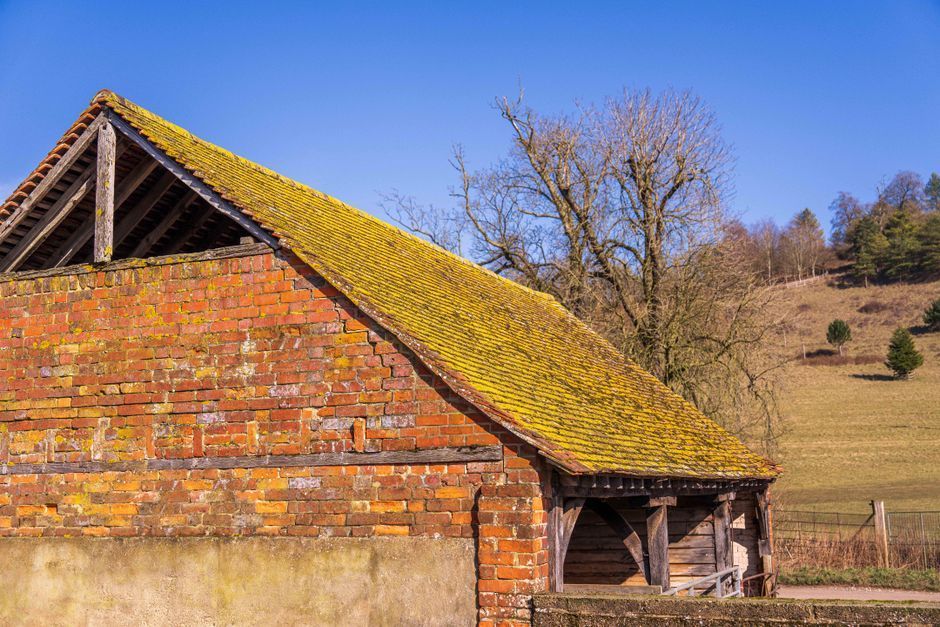
Glasgow's roofs are mostly Scottish slate, and slate is slick at the best of times. Add the near-constant damp off the Atlantic and a layer of moss, and you've got a surface with almost no grip. People assume a dry-looking morning means a dry roof, but slate holds moisture in the shade long after the pavement has dried, and north-facing slopes in streets around Partick or Dennistoun can stay greasy all day.
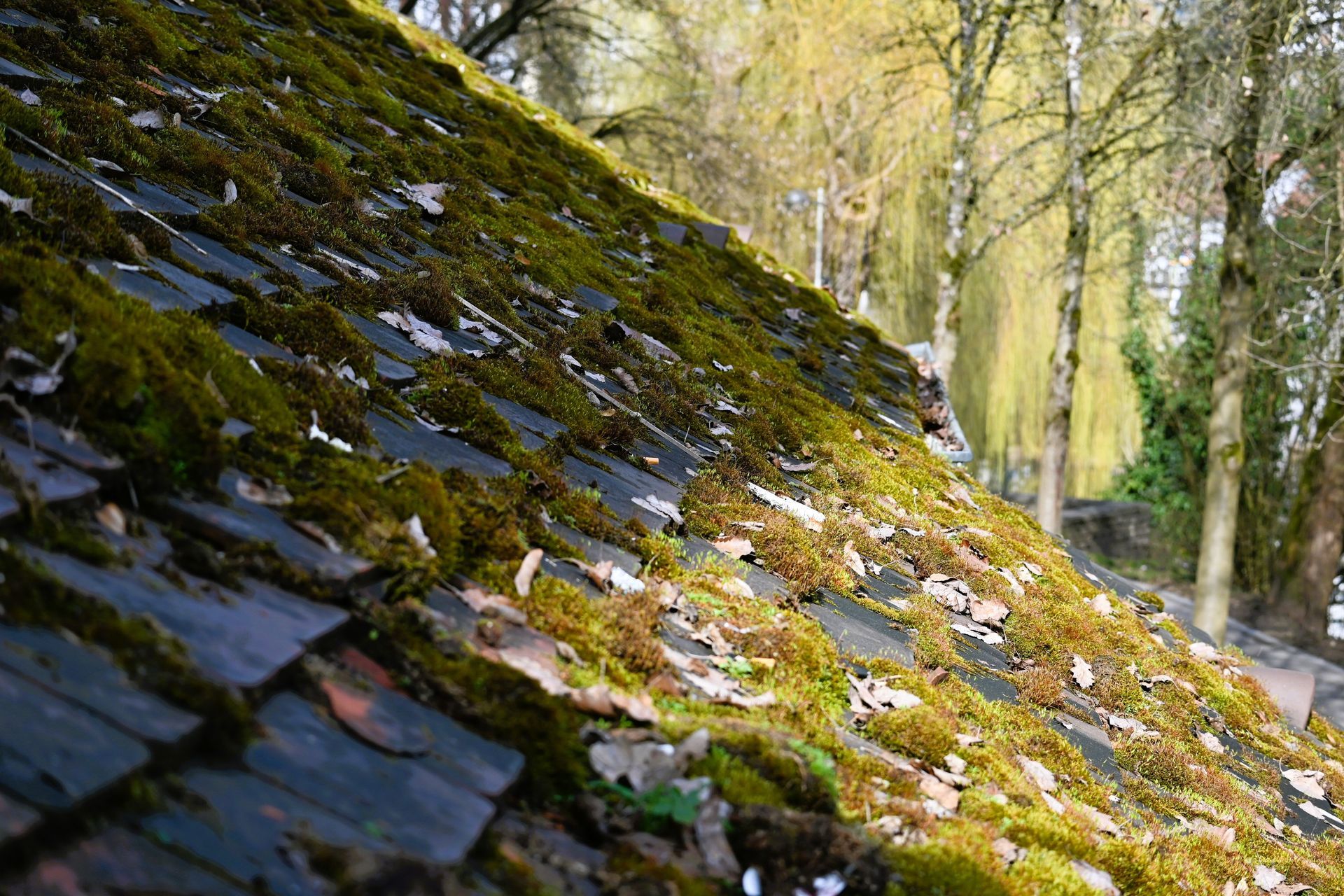
Moss makes it worse in a way that catches people out. A thick mat of moss looks like it would give you something to hold, but underfoot it acts like a wet sponge on glass, sliding off the slate the moment you put weight on it. That's the moment a lot of DIY roof jobs turn into falls, and it happens fast.
3. It's easy to do real damage to the roof
Even if you stay safe, there's the roof itself to think about. Scottish slate is brittle, and walking on it or leaning a ladder against it cracks tiles far more easily than most people expect. One cracked slate lets water in, and on an older tenement roof that can mean damp spreading through the sarking and into the flat below before anyone notices.
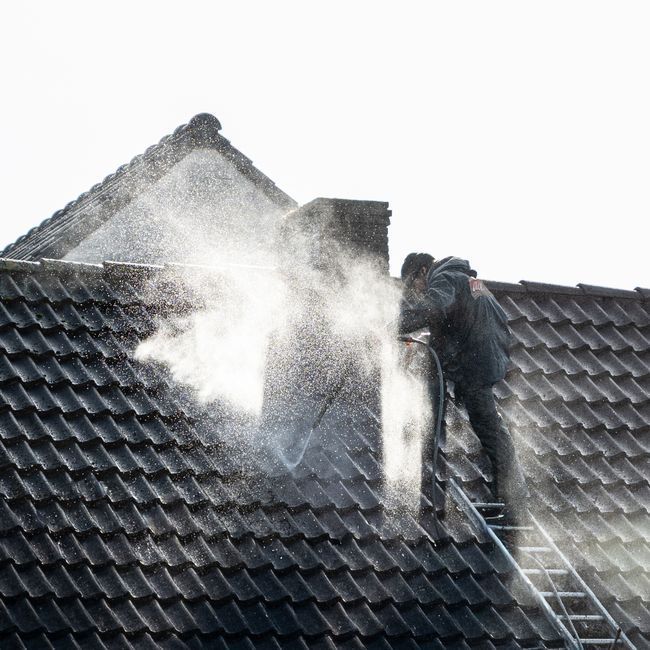
Then there's the pressure washer that so many DIY cleans reach for. Blasting slate at high pressure strips the surface, forces water up under the tiles, and can loosen the ridge and hip pointing that keeps the whole thing weathertight. What looks clean on the day can turn into a leak by the next storm, and Glasgow rarely keeps you waiting long for one of those.
4. You probably won't get the result you wanted
Roof cleaning done properly isn't just scrubbing. Shifting moss for good means treating it with a biocide so it dies at the root rather than growing straight back, and knowing how much to lift by hand versus leaving to die off. Without that, a DIY clean tends to knock the green off the surface while leaving everything underneath ready to regrow within a season.
So you take on the risk and the effort, and a few months later the roof looks much as it did before. That's the frustrating outcome a lot of people land on. The job that was meant to save money ends up being done twice, once badly by you and once properly by someone else.
5. The access problem on Glasgow housing
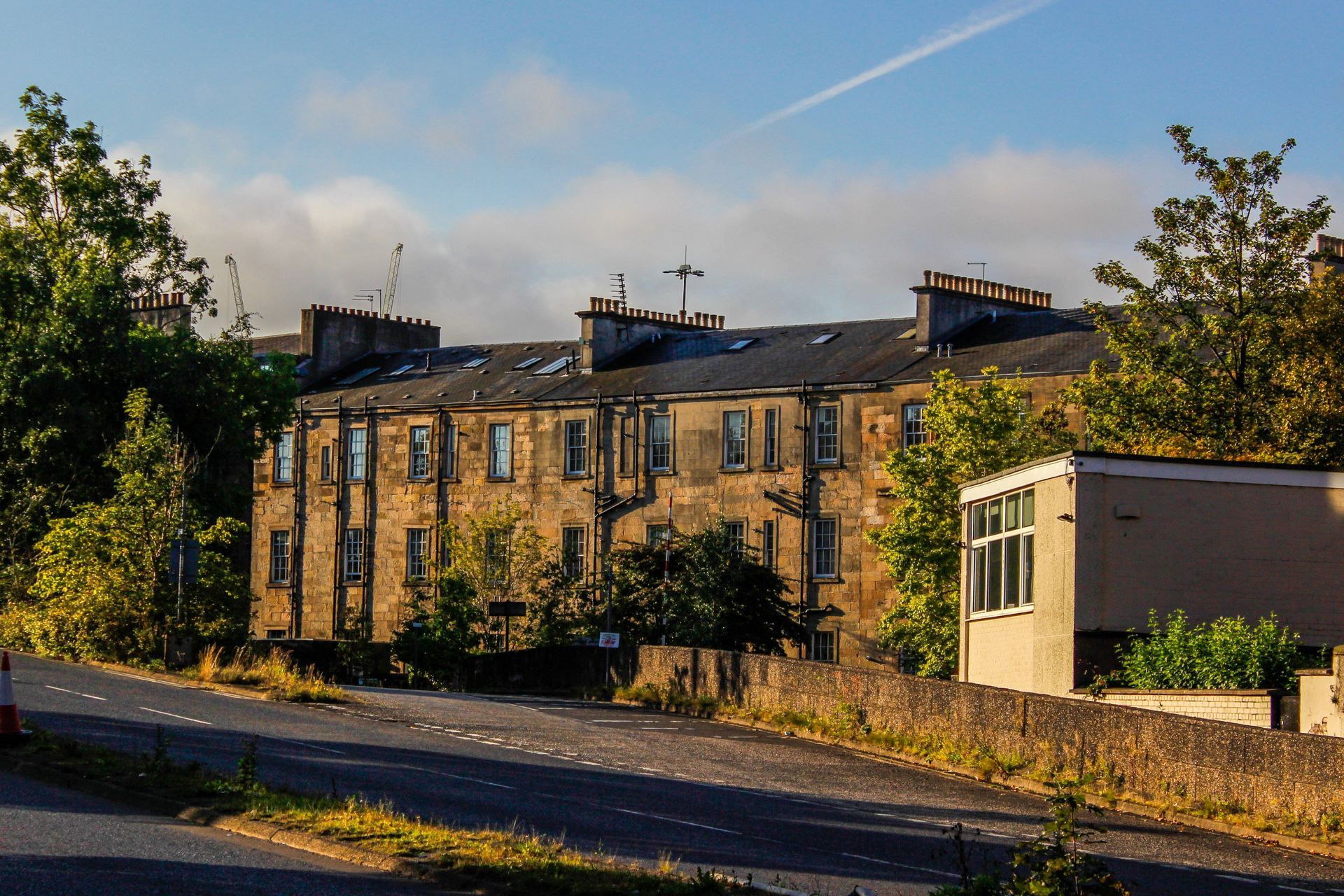
Our housing makes DIY harder than in a lot of places. A tenement roof is shared, often four storeys up, with no simple way to reach it from a domestic ladder, and the back court gives you little room to set up safely. Even the bay-window and rear-extension roofs on sandstone terraces sit at awkward heights over paths and boundary walls. This isn't a bungalow you can lean a stepladder against.
Shared roofs bring another wrinkle. On a tenement, the roof over your head covers your neighbours too, so any work up there affects the whole building. Damaging a slate or a shared gutter isn't just your problem, it's everyone's, and that's a good reason to leave it to someone who does it every day and carries the cover to match.
6. When a bit of DIY is fine, and where the line sits
None of this means you can never touch anything outside. Clearing leaves from a ground-floor gutter you can reach safely from a stable, well-footed ladder, or brushing debris off a low garage roof, is reasonable if you're careful and the ground is firm. Small, low, and stable is the rule of thumb.
The line sits at height and pitch. The moment you're climbing onto a slope, working above the first floor, or reaching for a pressure washer, the sums change. The saving stops being worth the risk to you and to the roof, and that's the point where bringing someone in is the sensible call rather than the lazy one.
- Fall risk: Working at height is the biggest danger, and a Glasgow tenement puts you a long way above a hard back court.
- Slippery slate: Wet Scottish slate and moss give almost no grip, even on a day that looks dry.
- Tile damage: Brittle slate cracks under foot or ladder, and one broken tile lets water into the flat below.
- Pressure washers: High pressure strips slate and forces water under tiles, causing leaks later.
- Regrowth: Without a biocide treatment, moss knocked off by hand grows straight back within a season.
Frequently Asked Questions
Can I just clear moss from the edge of the roof I can reach?
If you can reach it safely from a stable ladder without leaning out or stepping onto the slope, light clearing at the edge is low risk. The danger starts the moment you have to climb onto the roof or overreach, so if that's what it takes, it's better left alone.
Is a pressure washer really that bad for a roof?
On slate, yes. High pressure strips the surface, drives water under the tiles, and disturbs the pointing that keeps the roof sealed. Low-pressure soft washing with a treatment does the job without any of that harm, which is why it's the standard approach.
What's the risk on a tenement specifically?
The roof is shared, high, and steep, with no easy domestic access and a hard back court below. Damage affects your neighbours as well as you, and the height makes a fall far more serious, so tenement roofs are firmly a job for the pros.
Will DIY cleaning void anything?
It won't void a warranty as such, but cracked slates or water forced under tiles can cause damage that costs far more to fix than a professional clean would have. The money saved on the day tends to disappear if something goes wrong.
How do professionals stay safe up there?
They plan access for the height, use the right equipment, work in low-pressure and often reach-and-wash methods that keep them off the slope, and carry insurance. That combination is what turns a risky job into a routine one.
Rather leave the roof to someone who does it every day?
Ben's Roof Cleaning handles roof cleaning, moss removal, and gutter cleaning across Glasgow and Scotland, with over 15 years of experience. Get in touch or call 0141 483 7632
for a free, no-obligation quote.
Save the money somewhere safer
There's no shame in wanting to keep costs down, but a roof is one of the worst places to try it. The height, the slippery slate, the brittle tiles, and the shared nature of so much Glasgow housing all stack the odds against a good DIY result. You risk your safety, you risk the roof, and more often than not you end up paying someone to sort it properly anyway. Leave the high work to people set up for it, and put your Saturday to better use.