How Blocked Gutters Lead to Damp Walls
You've noticed a dark patch spreading on an inside wall, or a musty smell in the corner of a room, and you can't work out where it's coming from. Before you start blaming the plumbing, look up outside. A surprising amount of damp inside Glasgow homes starts with a gutter that hasn't drained properly in months, quietly sending rainwater somewhere it was never meant to go.
Gutters are easy to forget because they only matter when it rains, and by then you're indoors not looking at them. But in a city that gets rain most weeks of the year, a blocked gutter doesn't get many days off. This post explains how a clogged gutter turns into a damp wall, why our sandstone housing is especially at risk, and how to catch it before it becomes an expensive problem inside.
The quick answer: A blocked gutter overflows and runs water down the wall instead of away from it, and that constant soaking soaks into the masonry and shows up as damp on the inside.
1. What a gutter is actually there to do
A gutter has one job: catch the water running off the roof and send it down the pipe and away from the building. When it works, the wall below stays dry because the water never touches it. The whole system is designed to keep rain moving away from the house, which matters enormously on a Glasgow street where the roof sheds a lot of water in a short burst.
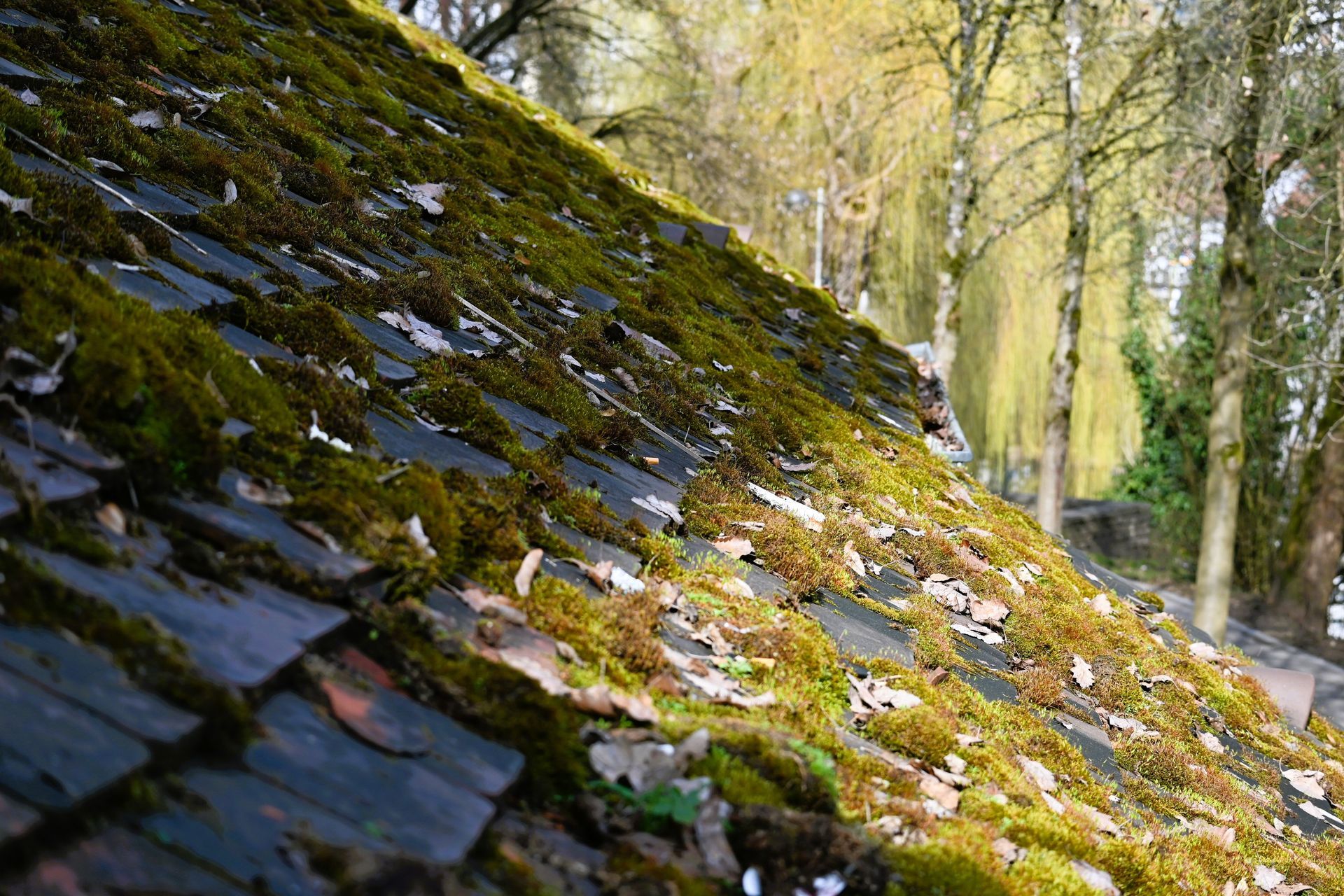
The trouble starts when the channel fills up. Moss washed down off a slate roof, leaves from the trees in the back court, grit, and general muck all collect in the gutter over time. Once that build-up blocks the flow, the water has nowhere to go but over the edge, and instead of running away from the wall it starts running straight down it.
2. How the water gets from gutter to wall
An overflowing gutter doesn't spill neatly. It sheets over the front edge or leaks from the joints, and that water hits the wall below again and again every time it rains. On a tenement or terrace, that might be four storeys of masonry taking a regular soaking, always in the same spot where the blockage sits.
Sandstone, which so much of Glasgow is built from, is porous. The red and blond sandstone that gives streets in Dennistoun and Pollokshields their character soaks up water like a slow sponge. Keep wetting it in the same place and the moisture works its way through the thickness of the wall, and eventually you see it on the inside as a damp patch, blown plaster, or a stain that keeps coming back no matter how often you paint over it.
3. Why Glasgow homes are especially at risk
Two things stack up against us here: the rain and the stone. Glasgow gets well over a metre of rainfall a year, spread across far more wet days than most of the country, so a blocked gutter is overflowing again and again rather than just once in a while. There's rarely a long dry spell to let a soaked wall recover.
The sandstone makes it worse. Unlike a modern cavity wall that has a gap to stop moisture crossing, the solid stone walls of older tenements and terraces give damp a direct path inward. Add the shared gutters that run along a whole tenement block, where one neighbour's blockage becomes everyone's damp, and you've got a recipe for trouble that a drier city with brick cavity walls simply doesn't face as often.
4. The damage that builds up over time
Damp from a blocked gutter rarely announces itself with a dramatic leak. It creeps. First there's a faint tide mark or a patch that feels cold and slightly soft, then the plaster starts to blow, then the paint or wallpaper lifts, and if it goes on long enough you get the musty smell and the black spotting of mould in the corner. By that stage the wall has been wet for a long time.
Left alone, constant damp does more than spoil decoration. It can rot skirtings and timber built into the wall, and it makes a room colder and harder to heat because wet walls hold the chill. On a shared tenement wall the damage can spread between flats, which turns a simple gutter clear into a much bigger and more awkward repair job.
5. Spotting the warning signs early
The good news is that blocked gutters give you plenty of warning if you know where to look. In heavy rain, step outside and watch the gutters. If water is spilling over the front edge or streaming from a joint rather than running to the downpipe, that gutter is blocked. Streaks and green staining running down the wall below a gutter are another giveaway even on a dry day.
Look for plants too. If you can see grass, weeds, or a fringe of moss growing along the top of a gutter, it's full enough of debris to support them, which means it's full enough to overflow. Any of these signs on a Glasgow home, especially heading into autumn when the leaves come down, is a nudge to get the gutters cleared before the wet weather really sets in.
6. Clearing and keeping ahead of it
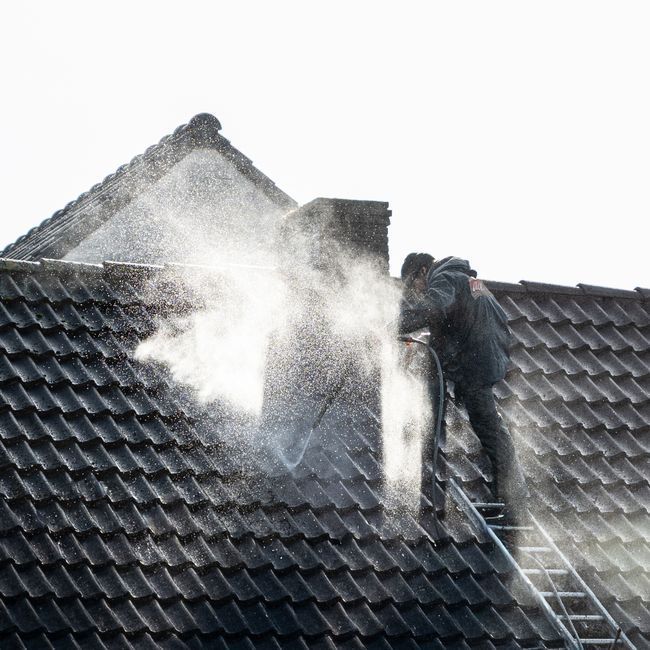
Clearing a blocked gutter is straightforward for someone set up to reach it safely, and it's far cheaper than fixing a damp wall after the fact. The channel gets emptied of moss, leaves, and grit, the downpipe is checked so it's actually carrying water away, and the joints get a look for leaks. Once it's flowing freely again, the wall gets a chance to dry out.
Keeping ahead of it is mostly about timing. On most Glasgow homes a clear once or twice a year does it, ideally after the autumn leaf fall and again in spring. If you've got trees close by or a roof that sheds a lot of moss, you might need it more often. Either way, a regular clear is the cheapest damp insurance a house can have.
- The overflow: A blocked gutter spills over its edge and runs water down the wall instead of away from it.
- Porous stone: Glasgow sandstone soaks up repeated soakings and carries the moisture through to the inside.
- Constant rain: Over a metre a year means a soaked wall rarely gets a chance to dry out.
- Creeping damage: Damp starts as a tide mark and builds to blown plaster, mould, and rotten timber.
- Early signs: Overflow in the rain, wall staining, and plants in the gutter all warn you before it gets indoors.
Frequently Asked Questions
How do I know if my damp is from the gutter or something else?
Damp from a gutter usually shows on an outside wall, often high up or in a patch that matches a spot where water overflows outside. If the staining lines up with a gutter you can see spilling in the rain, that's your likely cause, though it's worth ruling out other sources too.
How quickly can a blocked gutter cause damp?
In Glasgow's climate it can start within a season, because the wall gets soaked repeatedly with little chance to dry. The visible signs inside often lag behind, so by the time you see a patch, the gutter has usually been overflowing for a while.
Can I clear the gutter myself?
A low, easily reached gutter you can get to from a stable ladder is manageable with care. Anything at tenement height or awkward to reach safely is better left to someone with the right access, as the fall risk outweighs the saving.
Will the damp go away once the gutter is cleared?
Clearing the gutter stops the source, and a wall that isn't badly damaged will dry out over the following weeks and months. If the damp has been there a long time, the wall may need drying and the decoration making good once it's dry.
How often should Glasgow gutters be cleared?
Once or twice a year suits most homes, typically after autumn and again in spring. Homes with overhanging trees or mossy roofs, common across the leafier suburbs, may need clearing more often to stay ahead of blockages.
Worried a blocked gutter is behind your damp?
Ben's Roof Cleaning handles gutter cleaning, roof cleaning, and moss removal across Glasgow and Scotland, with over 15 years of experience. Get in touch or call 0141 483 7632
for a free, no-obligation quote.
Dry gutters, dry walls
A blocked gutter is a small problem that turns into a big one if it's ignored, and in a wet city built from porous sandstone it turns fast. The water that should be running safely away instead soaks into the wall, and what starts as a stain outside ends up as damp, mould, and rot inside. Clearing the gutters a couple of times a year keeps the whole system doing its job and keeps your walls dry. It's a small bit of upkeep that saves a lot of grief.