Cleaning Moss Off a Flat or Low-Pitch Roof
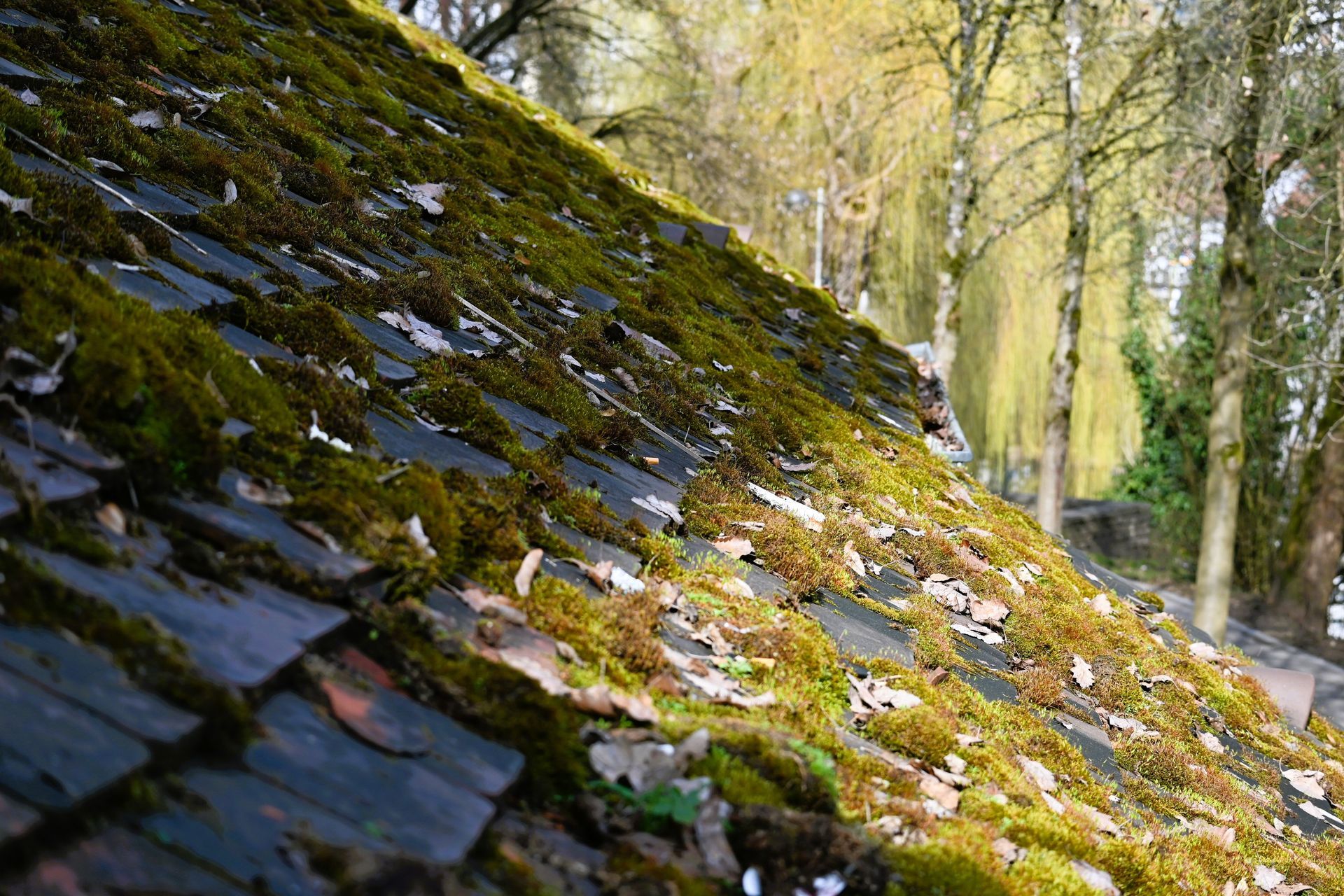
You've probably looked out an upstairs window at the flat roof over your kitchen extension and seen it going green. On a low-pitch roof the moss doesn't slide off the way it might on a steep slate main roof, so it just sits there, soaking up rain and spreading a little further every wet week. In Glasgow, where the rain rarely takes a proper break, that green layer can turn a tidy felt or GRP roof into a soggy sponge faster than most people expect.
The trouble is that flat and low-pitch roofs are the ones we notice least and worry about most once something goes wrong. They cover rear extensions on Govanhill tenements, dormer conversions in Shawlands, garages and old back-court washhouses, and the little bay-window roofs on sandstone terraces all over the city. This post walks you through why moss loves these roofs, how to shift it without wrecking the surface, and when it's smarter to leave it to someone with the right kit.
The quick answer: Clear moss off a flat or low-pitch roof with gentle low-pressure soft washing and a proper biocide treatment, never a jet wash, because the flat surface holds water and damages easily.
1. Why moss takes hold on a flat roof so quickly
Moss needs three things to thrive: moisture, shade, and a surface that stays damp long enough for spores to settle. A flat or low-pitch roof gives it all three on a plate. Water that would run straight off a 45-degree slate roof lingers in shallow puddles on a flat one, and that standing damp is exactly what moss spores are waiting for. Glasgow's mild, wet climate, with well over a metre of rain a year rolling in off the Atlantic, keeps these roofs damp for weeks at a stretch.
Shade makes it worse. Rear extensions in dense tenement streets like those around Dennistoun sit in the shadow of the main building for much of the day, so the roof never really dries out. Add a few overhanging trees in a back court and you've got a roof that stays green from October right through to spring. Once a thin mat of moss forms, it holds even more water against the surface, and the whole thing feeds itself.
2. The damage moss does if you leave it
On a felt roof, moss roots work their way into the tiny cracks and the granular surface, lifting the top layer and speeding up the wear. Every time it rains the moss swells with water and sits heavy against the felt, and every cold snap that water freezes and expands, opening those cracks a little wider. A Glasgow winter throws plenty of freeze-thaw cycles at a roof, and a mossy flat roof takes the brunt of every one.
The bigger problem is drainage. Flat roofs rely on a slight fall towards an outlet or gutter, and a thick carpet of moss blocks that path. Water pools where it shouldn't, finds the weakest seam, and starts working its way in. By the time you spot a damp patch on the kitchen ceiling below, the moss has usually been doing quiet damage for a season or two. Clearing it early is far cheaper than dealing with a leak.
3. Why a pressure washer is the wrong tool
It's tempting to point a jet wash at a green roof and blast it clean, and for about ten minutes it looks great. The problem is what that pressure does to the surface underneath. On felt, a strong jet strips the protective granules and can tear the membrane outright. On GRP or asphalt, it forces water into every seam and lap joint, which is the last thing a flat roof needs.
Soft washing does the opposite. It uses low-pressure water paired with a biocide that kills the moss, algae, and lichen at the root rather than just knocking the top off. On the flat roofs common across Partick and Pollokshields, where the surface is often older felt that has already had a hard life, that gentle approach is the difference between a clean roof and a roof that needs replacing a year early.
4. How the moss actually comes off
The honest answer is that a lot of it comes off slowly, and that's a good thing. The biocide is applied and left to do its work, so over the following weeks the moss dies back, dries out, and loosens its grip. On a flat roof we tend to lift the bulk of the loose growth off by hand or with a soft tool first, then treat what's left, because that avoids scrubbing hard at a surface that doesn't want to be scrubbed.
What you don't want is someone scraping aggressively at old felt to make it look instantly perfect. A roof over a back-court extension in the east end might be decades old, and the surface has to last. A careful clean and treatment leaves it sound and gives the biocide time to keep working, rather than trading a quick result for a shortened roof life.
5. Getting the drainage working again
Clearing the moss is only half the job on a flat roof. All that dead growth, plus the grit and leaf litter that collects on any low surface, has to be swept clear of the outlets and gutters so water can actually escape. A flat roof with a blocked outlet is just a shallow paddling pool waiting for the next downpour, and Glasgow gives it plenty of chances.
This is where flat-roof cleaning and gutter cleaning overlap. The rear gutters on tenement extensions and terraced homes across the south side take runoff from both the main roof and the flat one below, so if they're packed with moss and debris the water backs up onto the flat roof and the whole system struggles. Clearing both at once keeps everything draining the way it was built to.
6. Keeping it clean once it's done
A proper biocide treatment is what buys you time after the clean. Because it kills the spores rather than just removing what's visible, the roof stays clearer for far longer than a quick wash ever would. On a shaded, north-facing flat roof in a damp Glasgow street you might still see some regrowth eventually, but you're looking at years rather than months before it needs attention again.
A quick look a couple of times a year keeps you ahead of it. After the autumn leaves have come down and again in early spring, glance at the flat roof and its outlets from an upstairs window. If you can see green creeping back or debris gathering at the drain, it's worth booking a clear before it builds into anything serious. Small and regular always beats a big rescue job.
- Standing water: Flat roofs hold damp far longer than pitched ones, which is exactly what moss needs to spread.
- Surface damage: Moss roots lift felt granules and freeze-thaw cycles widen the cracks over a Glasgow winter.
- No jet washing: High pressure strips felt and forces water into seams, doing more harm than the moss did.
- Soft wash and biocide: Low pressure plus a treatment kills growth at the root and protects the surface.
- Clear the outlets: Dead moss and debris must be swept off so the roof drains properly again.
Frequently Asked Questions
Can I clean my flat roof myself?
You can clear light debris from ground level or a stable window, but going up onto a flat roof is riskier than it looks. The surface can be slick with moss, and older felt won't always take your weight safely, so anything beyond a quick clear is usually better left to someone with the right access and kit.
Will the moss come straight back?
Not for a good while if it's treated properly. A biocide kills the spores as well as the visible moss, so on most Glasgow roofs you're looking at a few years of clear surface rather than a few months, especially if the outlets stay clear.
Is a low-pitch roof different from a truly flat one?
Only slightly, in that a low pitch sheds a little more water than a dead-flat roof. Both still hold damp far longer than a steep slate roof, so both grow moss readily and both need the same gentle, low-pressure approach.
How long does a flat-roof clean take?
The visit itself is usually a few hours depending on size and access. The moss then dies back over the following weeks as the treatment works, so the roof keeps improving well after the visit is finished.
Does moss really cause leaks?
Not directly, but it holds water against the surface and blocks the drainage, and that trapped moisture is what finds the weak seams. On an ageing flat roof over a tenement extension, clearing the moss removes one of the main things working against it.
Got a mossy flat or low-pitch roof that needs sorting?
Ben's Roof Cleaning handles flat and low-pitch roof cleaning, moss removal, and gutter cleaning across Glasgow and Scotland, with over 15 years of experience. Get in touch or call 0141 483 7632
for a free, no-obligation quote.
A clean flat roof is a roof that lasts
Flat and low-pitch roofs do a quiet, unglamorous job, and they tend to get ignored until water is coming through the ceiling below. Keeping the moss off with a gentle soft wash and a proper treatment protects the surface, keeps the drainage working, and adds years to a roof that would otherwise wear out early. In a city as wet as Glasgow, that bit of upkeep pays for itself. A few minutes checking it each season, and a proper clean when it needs one, is all it takes to stay ahead of the green.